Artist of the week: Vanessa Karin
By Radar Crítico de Lima
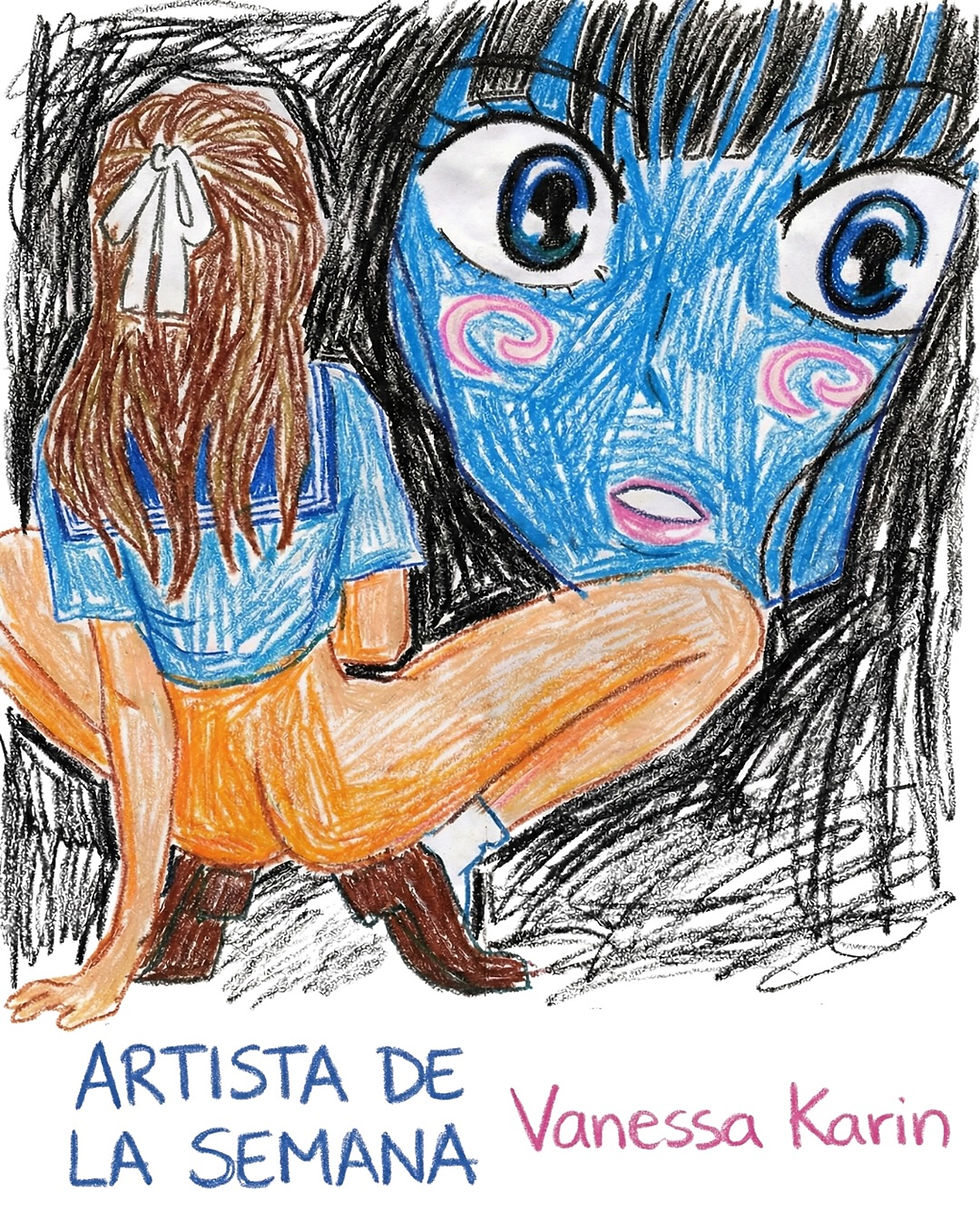
The visual production of Vanessa Karin cannot and should not be read without keeping in mind the context in which it emerges. It must be highlighted that, in a country like Peru, the body (naked or eroticized), desire, and sexuality remain territories policed by morality, religion, and conservatism. Although we know it—even if we sometimes remain silent—the double standards of those who forbid these practices often result in them consuming these images in private.
In series such as Of Desire and Anime or Flirty Crybaby, the artist works with imagery from the universe of manga, anime, and elements of hentai visual culture; let us be clear, she does not revisit Asian aesthetics to reproduce desire. Instead, Karin offers a critique of the patterns of eroticization and the visual normativity of the body, exploring how desire is produced, codified, learned, and normalized through images.

Within the Peruvian "conservative" landscape, where the female body is usually accepted only under certain conditions—such as motherhood, sacrifice, or silence—Vanessa Karin’s work breaks away from patterns and stereotypes to introduce an intentional discomfort that is difficult to neutralize. She succeeds in challenging the limits of what is permitted, what can be said, and what is socially tolerated in Peruvian visual culture. Importantly, her work does not clash with conservatism for the sake of scandal, but rather through symbolic disobedience.
From a formal standpoint, Vanessa Karin does not create pieces for quick consumption. Her work responds to an aesthetic that is not designed to circulate easily or to offer us a peaceful visual experience. She does not allow herself to be tamed; she insists on thought as a condition that problematizes visual representation.
The question that runs through Vanessa Karin's work is not only what kind of bodies we desire, but who decides how they should be seen, represented, and/or accepted. In a country where censorship is often disguised as tradition or morality, her artistic practice confronts us with a necessary discomfort and makes us wonder: what do we do with works of art that do not confirm our values, but rather place them in crisis? Now, one thing remains clear: the problem is not the work, but the fragility of our cultural certainties.
Morality censors in public what desire sustains in private.

Read original post in spanish here


Comments